
The recently concluded Free Trade Agreement (FTA) between India and the European Union marks more than an economic breakthrough. It represents a strategic step forward at a time of global uncertainty, shifting trade patterns and continuing supply-chain disruptions.
After nearly two decades of negotiations, the agreement links India – the world’s fastest-growing major economy with a population of 1.4 billion – with the European Union’s integrated market of about 450 million consumers. Together, they account for nearly a quarter of global GDP and close to one-third of world trade.
Prime Minister Narendra Modi has framed the FTA as a “new blueprint for shared prosperity,” stressing that it is designed not merely to increase trade volumes but to promote long-term cooperation in investment, innovation and industrial growth. Addressing India’s Parliament, he emphasised that the pact provides access to 27 EU member states and reflects India’s readiness to compete globally while maintaining high standards.
For Lithuania and other EU member states, the agreement must be seen through the prism of trade diversification, technological cooperation and geopolitical resilience. President Gitanas Nausėda has described the pact as “a significant step forward in bridging two subcontinents and two major economic powerhouses”. Emphasising the importance of strengthening global economic partnerships for the EU, Prime Minister Inga Ruginienė termed the FTA as a historic achievement that will elevate the India-EU relationship to the next level.
Beyond commerce, people-to-people ties between India and Europe are already strong and growing. More than 121,000 Indian students study in the European Union, reinforcing long-term educational and cultural links that underpin the broader partnership.
Economic ties between India and the EU are substantial. In the 2024-25 financial year, bilateral merchandise trade reached USD 136.5 billion, while services trade stood at USD 83.10 billion. Investment flows are equally robust. Cumulative EU foreign direct investment in India totalled USD 129.94 billion between January 2000 and September 2025, while India’s cumulative FDI into the EU reached USD 44.75 billion between April 2000 and August 2025. Under the Agreement, both sides agree that there remains immense potential to further expand trade and investment within a predictable, rules-based framework.
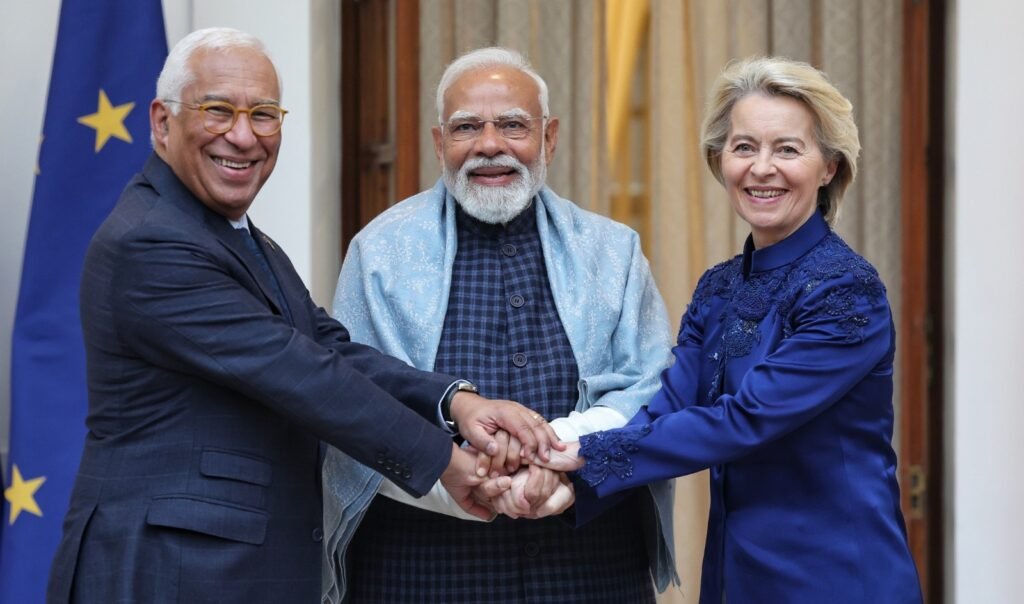
The FTA goes far beyond tariff reductions. It establishes cooperation across goods, services, digital trade, investment and mobility. European Commission President Ursula von der Leyen has called it the “mother of all deals,” reflecting both its scope and strategic importance.
For European exporters, the agreement opens wider access to India’s rapidly growing market in key sectors such as mechanical and electrical machinery, chemicals, aircraft, medical devices and high-tech equipment. It also provides phased market access to India’s automobile sector, allowing a gradual and balanced opening of a strategically sensitive industry.
In services, India offers market access in 102 sub-sectors, covering key EU interests such as maritime transport, financial services, telecommunications and environmental services, while granting Most-Favoured-Nation (MFN) treatment. This significantly improves predictability for European service providers and strengthens cooperation in digital and professional services.
The agreement also contains provisions on sustainable development, reflecting shared commitments to sustainability, environmental protection and responsible business conduct.
From a European perspective, the FTA complements the EU’s existing more than 40 FTAs and association agreements with Ukraine and other partners. Thus, it strengthens Europe’s broader strategy of trade diversification and supply-chain resilience, reducing dependence on a single source and deepening engagement with multiple partners.
At a time of rising global protectionism and trade tensions, the India–EU agreement sends a powerful signal in favour of cooperation. Lithuania’s foreign policy, which emphasises openness, resilience and partnership among democracies, aligns closely with the spirit of the pact. As President Nausėda has observed in the context of global tariff disputes, trade wars have no winners.
The India–EU Free Trade Agreement, therefore, marks a new chapter not only for Brussels and New Delhi but also for countries such as Lithuania that are deeply invested in Europe’s economic revitalisation and joint security. It is not simply about lowering tariffs; it is about forging a future-oriented partnership built on trade, investment, innovation and shared values of democracy and rule of law – one that promises lasting benefits for both sides in an evolving global economic order.
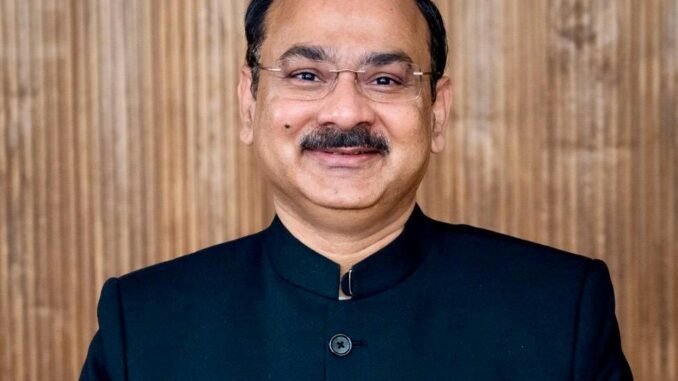
(By- Devesh Uttam, Ambassador of India to Lithuania)
Be the first to comment