
No Picture
History

Climate in medieval Lithuania

From the eighth century onwards, climate in Europe was becoming ever milder while the period from the 10th through the 13th century is often referred to as the “warm Middle Ages” or the “climatic optimum”. Summers were, on the average, one to two degrees Celsius warmer compared to the late 20th century, and precipitation was more abundant. The warm and humid climate enabled more intense development of agriculture and husbandry while also making use of new crops. By burning out sections of wood, people were rapidly expanding open areas for fields and grazing grasslands. Oat, wheat, barley, all suitable for drier climate, were the favourite corn, as well as the less-demanding rye. Archaeologists date the first traces of winter rye fields in the Samogitian Heights back at around the year 800. […]

No Picture
History

The yard of a medieval artisan

In the 13th and 14th century, artisans and merchants used to build their homes in the safe neighbourhood of the main castle mounds. More numerous communities of artisans represented a new object in the social landscape because they were not typical in the earlier society of husbandmen and cattle raisers. Quarters inhabited by artisans and their families stretched next to the main political and administrative centres – the castles where dukes resided together with the people constituting their closest environment. Artisans worked to meet the demands of the ducal court. Supposedly, they would sell part of their products or exchange them for daily bread. […]

No Picture
History

The lives of fallen GDL noblemen

The noble estate enjoyed the most important position in the social hierarchy of the Grand Duchy of Lithuania. The nobility, however, was far from homogenous. It consisted of aristocrats, (the magnates), as well as of middling and petty nobles who owned little or no land at all respectively. The importance and financial might of noble families and even particular individuals was constantly fluctuating. Many families went through a process of ascent and subsequent slide down or even oblivion. A considerable number of the noblemen were utterly poor. They sometimes could hardly afford their daily meals yet they still enjoyed all the privileges of the estate. Some of them – mostly vagabonds – would eventually cross the line and lose their symbols of the nobility. They would live on accidental income, sometimes illegal, and would very often end up in prisons or on the scaffold. Surviving interrogation documents reveal the paths that led them into the world of crime. What kind of life was it? […]

Biržai castle
History

Self-rule in GDL Biržai

Between the beginning of the 16th century and the middle of the 17th century, there were about 800 functioning towns and cities in the GDL that had the traits of city-like settlements, however only a small number of them had rights to self-rule. During the following 400 years after the establishment of the first self-governing city, Vilnius, in 1387, up until 1795, it is estimated that there were approximately 250 self-ruling cities that had the kind of Magdeburg rights generally given in the GDL. The Magdeburg rights were the primary legal act that set a city apart from other settlements that did not have privileges issued to them. One of these cities was Biržai, which during the existence of the GDL belonged to the Radvila family, who were the dukes of Biržai and Dubingai and one of the most powerful noble families in the GDL. It was their private city. […]

Augustus II
History

The union of the Commonwealth of Two Nations and Saxony

Frederik August I (1670-1733), Elector of Saxony, became the King of Poland and the Grand Duke of Lithuania (1697-1733) on June 27th, 1697. During the coronation, the new ruler took the name of Augustus II, but often was called the Strong due to his unusual physical strength. Saxony was one of the most economically developed states in Europe at the end of the 17th century. Entering into a personal union with Saxony, the Commonwealth had better prospects in international politics than many surrounding nations. The new leader, having his own state, could hope that he would be able to rule the boyars of the Commonwealth. […]

Vilnius University
History

Studies by GDL Vilnius residents in Europe

Studies abroad reflect the direction of a country’s integration into educational and cultural spheres as well as its degree. The scope of university studies that had grown in Europe in the 17th-18th century was tied to the processes of professionalization and rationalisation, which accompanied the strengthening of the role and bureaucratization of the state. In the Commonwealth, these trends expressed themselves somewhat less which is why the need for experts with a university education was small. […]

No Picture
History

Education and patriotic upbringing for women in the Age of Enlightenment

Women of the early modern period, even those from the privileged estates, could not enjoy full civil rights in their countries. Their activity was very often limited by the private space of her house and a woman was seen as a wife, mother and a housewife. Simultaneously, the modern period signified the beginning of core changes as the ideas of the day, particularly in relation to women’s position in the society, resonated throughout Europe, down to the farthermost corners of the Grand Duchy of Lithuania. […]

No Picture
History

Scouts and guides in medieval Lithuania

Life in the Baltic lands in the middle ages was full of dangers. In the 13th century, the old rivalries between the local tribes were accompanied by fights against the Knights of the Cross, and the Knights of the Sword. By comparing the art of warfare practised by local tribes and alien Germans, one can notice considerable differences in technical issues, such as weaponry, fortifications, and strategies, as well as in warfare customs. In this respect, the Livonian Chronicle by Henry of Latvia is particularly telling. While Germans and other western Christians would adhere to the knightly rules of war in Livonia, local Baltic and Finno-Ugric peoples acted very much like the barbarians did during the times of the Great Migration of the Nations. […]

No Picture
History

Suicide in pagan Lithuania

The romantic attitude towards the pagan Lithuania, shaped in the 19th century, remains tenacious up to these days. Romantic authors, such as Teodor Narbutt and Józef Ignacy Kraszewski who wrote in Polish, saw the old Lithuania as a fairy tale country with an ideal state order and virtuous inhabitants. They were confident that the Lithuanian history of the 13th and 14h century was a period of “golden times”. This kind of standpoint made an essential impact on the leading figures of the Lithuanian national resurgence in the second half of the 19th century. They employed the visions of the pagan glory to wake the nation up considering the majority of people immature for high nationalist aspirations. […]

No Picture
History

Drinking in the Grand Duchy of Lithuania

Alcohol, produced by fermenting liquids, has been known in many continents and cultures from as far back as the stone and bronze ages. The first knowledge of consumption of alcoholic beverages in the Balt lands, provided by the Anglo-Saxon traveller Wulfstan who visited the lower reaches of the Vistula River, date back to the end of the 9th century: “Kings and nobility drink mare milk, while the poor and slaves drink mead.” […]

No Picture
History

The sacrifice of captives

Human sacrifice is attributable to the most forbidding customs of ancient tribes. Among Asian and European cultures, it permeated unevenly. The Greek myths speak of human sacrifice but historical sources provide no data of any actual practice of the kind. In the ancient Greece, it was considered an old yet no longer exercisable rite replaced by the sacrifice of animals. Although the gladiator fights point to the fact that the Romans enjoyed terrifying shows, neither can they be associated with the human sacrifice as a common feature of their customs. […]

Lukiškių Square
History

The development of the Lukiškės suburb during the Grand Duchy of Lithuania

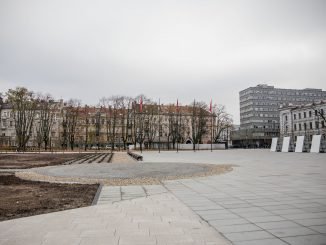
Lukiškės, which today is part of the city centre of Vilnius, for a long time was one of the oldest suburbs of the city, or to be more precise, a settlement near the city. It is a territory with one of the most unclearly defined territories in the city that has caused a number of conflicts and problems, which was fated to sooner or later become a part of the city due to its location. […]

No Picture
History

Toys and games in medieval Lithuania

Even in the times of gravest calamities and shortage, people did find time for games and other ways of making their everyday lives brighter, regardless of whether it was a ducal palace of a hut of a peasant family. In the 19th century, even the poorest peasants had simple wood-carved toys for their children. […]

No Picture
History

The family and the patriarchate in ancient Baltic societies

The family in the 13th and 14th century Lithuania represented a unit in many senses, from economical and productive to social, organisational, and legal. The average family consisted of five or six people. The remains of a 14th century house in the lower town of Kernavė feature a plank-bed, made of several benches, up to three by 1.7 metres. Since the average human of the time was about 1.65 metres tall, the bed could accommodate the entire family of five to six people. On the other hand, the family also had a broader meaning, the one that covered two or three generations of relatives, such as fathers and mothers, grandfathers and grandmothers, as well as unmarried brothers and sisters. […]

Šlyninkos watermill in Zarasai region
History

Lithuanian watermills in the 15th and 16th century: a slow technological revolution

Ancient civilisations already knew how to use the energy of running water, but it was the Western European civilisation that developed a vast network of watermills during the Middle Ages. The abundance of swift-running rivers and constant increase of crop areas in Europe were the two important factors behind the spread of watermills that eventually got involved in various technological processes, including smithing, papermaking, wood processing and groundwater regulation. In technical sense, history of Western watermills apparently developed independently from the experience of other civilisations, although the initial impulses might have arrived from elsewhere. […]

Nerija Putinaitė
CORPORATE

Soviet nomenclature should not have been permitted to take positions of authority

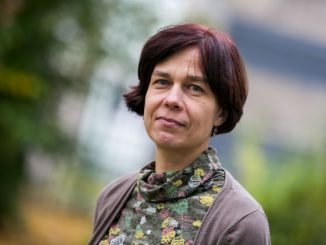
If in independent Lithuania the Soviet nomenclature had been prohibited from occupying positions of authority, we’d be talking about the government in a completely different way. That’s what philosopher, writer and public figure Nerija Putinaitė […]