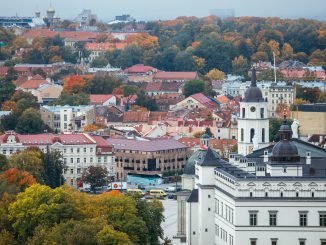
Vilnius University
Society

Lithuanian government okays university network reorganization plan

The Lithuanian government approved on Wednesday a university network reorganization plan worked out by the Education and Science Ministry and will now send it to the parliament. […]

No Picture
History

Toys and games in medieval Lithuania

Even in the times of gravest calamities and shortage, people did find time for games and other ways of making their everyday lives brighter, regardless of whether it was a ducal palace of a hut of a peasant family. In the 19th century, even the poorest peasants had simple wood-carved toys for their children. […]

No Picture
History

The family and the patriarchate in ancient Baltic societies

The family in the 13th and 14th century Lithuania represented a unit in many senses, from economical and productive to social, organisational, and legal. The average family consisted of five or six people. The remains of a 14th century house in the lower town of Kernavė feature a plank-bed, made of several benches, up to three by 1.7 metres. Since the average human of the time was about 1.65 metres tall, the bed could accommodate the entire family of five to six people. On the other hand, the family also had a broader meaning, the one that covered two or three generations of relatives, such as fathers and mothers, grandfathers and grandmothers, as well as unmarried brothers and sisters. […]

Vilnius
Society

UNESCO experts to evaluate property development projects in Vilnius

Experts from the United Nations Educational, Scientific and Cultural Organization (UNESCO) and the International Council on Monuments and Sites (ICOMOS) on Tuesday are starting on a two-day visit to Vilnius to evaluate two property development projects at the Culture Minister’s invitation. […]

Šlyninkos watermill in Zarasai region
History

Lithuanian watermills in the 15th and 16th century: a slow technological revolution

Ancient civilisations already knew how to use the energy of running water, but it was the Western European civilisation that developed a vast network of watermills during the Middle Ages. The abundance of swift-running rivers and constant increase of crop areas in Europe were the two important factors behind the spread of watermills that eventually got involved in various technological processes, including smithing, papermaking, wood processing and groundwater regulation. In technical sense, history of Western watermills apparently developed independently from the experience of other civilisations, although the initial impulses might have arrived from elsewhere. […]

VU student team Vilnius-Lithuania iGEM
Society

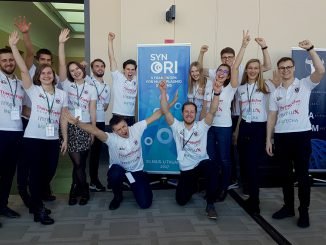
Vilnius university team wins the Grand Prize in iGEM competition

“Vilnius-Lithuania iGEM” team won the largest, most prestigious, international Synthetic Biology competition iGEM. Vilnius University students bested more than 300 teams from leading world universities. The team won the Grand Prize and received a gold medal as well as three special awards: for Best New Basic Part, Best New Composite Part and Best Part Collection, a press release from Vilnius University states. […]

Lithuanian passport
Society

Lithuanian parliament proposes total ban on legal gender recognition

On November 10th, 2017 the group of 31 MPs in the Lithuanian Parliament registered a legislative proposal, which aims at banning legal gender recognition (i.e. change of identity documents for transgender persons) and all medical procedures pertaining to gender reassignment treatment. This proposal stands in a sharp contrast with the jurisprudence of the national courts, granting legal gender recognition based on self-identification of a trans individual and corresponding mental diagnosis. If approved, Lithuania would become the only country within the broader region of the Council of Europe with an explicit ban on gender reassignment procedure, a press release from the Lithuanian Gay League states. […]