
Minister of National Defence Robertas Kaunas stated that Russia is considering possible provocations in the Baltic region. According to the participants of the Lietuva Tiesiogiai programme on Lietuvos Rytas TV, this is not a new statement lrytas.lt writes.
Gitanas Nausėda also spoke about this around two weeks ago, after the international media learnt that Poland was preparing for possible provocations.
What do such warnings actually mean?
Dr Žygimantas Pavilionis, a member of the TS-LKD parliamentary group, and historian and journalist Dr Algimantas Kasparavičius discussed the matter on the Lietuva Tiesiogiai programme on Lietuvos Rytas TV.
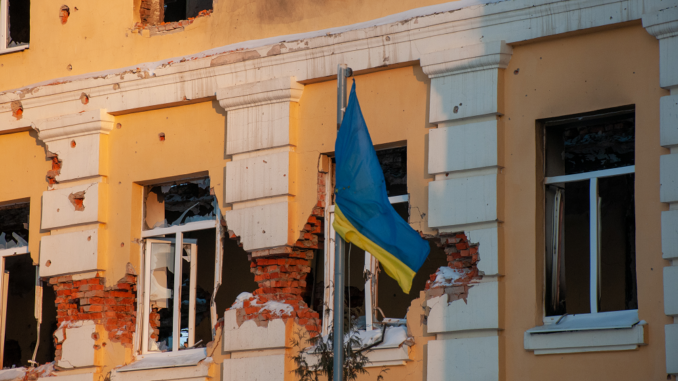
Undoubtedly, the context for such warnings is the war in Ukraine. Ukraine is striking ever deeper into Russian territory, and the Russians are responding even more fiercely. They are using ballistic missiles, against which Ukraine has no defences. What should we be preparing for, bearing in mind potential targets in the Baltic states?
We must prepare in advance, not at the last minute
An unusual protest in Vilnius: Vladimir Putin ‘dressed’ in a prisoner’s uniform and handcuffs
“We must always be prepared,” Kasparavičius reminded us. “If you start preparing at the last minute, you cannot expect a good outcome from such rushed preparations.”
According to him, one of the key aspects of the logic behind this war is that it promises to be a long one: “It has already gone on long enough. We are halfway through the fifth year, and it is a sufficiently brutal, devastating war.”
Both sides in the conflict – both Russia and the world that stands behind it and is partly represented by it, and the other side – Ukraine and the Western world standing by its side – currently have virtually no common ground that would allow them to try to understand one another, listen to each other’s arguments and, on that basis, find some compromise solution.
It is very clear today that both sides are preparing to escalate the conflict even further. If this trend continues, the war could likely spread to certain regions. There are many such regions – Moldova, the Caucasus, and ultimately our own northern Baltic Sea region, which is highly sensitive.
Nevertheless, I would venture to say that a great deal will also depend on the stance of those small states towards the war. Will those states be prepared, will they adhere to the strategy that we must prevail on the battlefield, or will they be inclined to seek some compromise and respite?”
A civilisational transformation is underway
According to the historian, there have always been conflicts in the world, and all conflicts have ended in one way or another.
“The key point is this: usually, when a conflict began, there was a certain number of participants or ‘players’, but after the conflict, the number of states would decrease significantly.
I would suggest that we are witnessing a certain civilisational transformation. What began at the start of the 20th century, during the First World War and especially afterwards – the collapse of empires and the democratisation and liberalisation of Europe in the broadest, truest sense of the word – underwent a certain turning point during the Second World War. We are now witnessing the conclusion and culmination of this 100-year process, a time when everything may change radically due to ideologies, technologies, and, well, probably also due to certain shifting moral attitudes amongst people. All three fundamental aspects are changing, and this is very important. A great deal may change as a result of this shift and may not survive,” explained Kasparavičius.
The historian believes that, in the context of the war, an initiative for compromise could also come from the Baltic states.
“There are many different formats. It could come from the government, or it could come from parallel structures. Very recently, the foreign press reported on negotiations between Europeans and Russians in the West, when former officials, acting in an unofficial capacity, saw fit to talk.
Such contacts do exist. This means that all is not yet lost. There is some hope that an agreement is possible without the war escalating into a total, insane nuclear conflict. I believe there are forces of reason in Russia, in Europe and in the United States of America.
There is only one question – who will prevail? The warmongers, who all imagine victory? Whether Russian, American, or from the European Union or NATO. The problem is that there can only be one victory.
As the entire history of war shows, plans for victory are usually mistaken, utterly mistaken. This was true of the First World War, the Second World War and the Napoleonic Wars. After all, the history of the Polish-Lithuanian Commonwealth illustrates this very well. We planned many victories, yet ended up with the virtual disappearance and loss of our state at the end of the 18th century,” the historian reflected.
Hopes pinned on America
“Ukrainians often emphasise that never before in history has Europe stood so united with Ukraine. Usually, they were, just like us, left to fend for themselves. And usually, that ended very sadly. And in my short life, I cannot recall a more united Europe,” noted Pavilionis.
The politician is also hopeful about the US position.
“What interests me most right now is how the final September session of this Congress in Washington will end. My Republican friends say there is considerable hope that the House of Representatives will approve a certain compromise, which will give Donald Trump additional leverage to impose sanctions not only on Russia but also on countries trading with Russia, including India and China,” said Pavilionis.
Ukraine’s defence industry, which is performing miracles, may encourage the US to promote the production here of ever more powerful weapons, which are not cost-effective to manufacture in America due to environmental and other requirements.
“If Ukraine becomes useful to America, it may be that our long-held dream – one spoken of even by former President Valdas Adamkus – of opening the way for Ukraine to join NATO through blood and sweat will become a reality,” said the politician.
“Our politicians – and in this case Žygimantas – are always pinning great hopes on finding earthworms on the tarmac,” retorted Kasparavičius.
“Five and a half years of war have shown us a great deal.
Let’s be blunt – de facto, Ukraine is NATO today. De facto, in terms of the military aid provided, as well as military logistical, technological, intelligence, propaganda, organisational and God knows what other capabilities. No NATO member state in the entire history of NATO since 1949 has ever been granted aid on such a scale, at such a cost and of such scope.
The conclusion is that NATO is incapable of doing this. NATO must, as of today, take a deep breath or face the facts and draw conclusions it has yet to reach. Otherwise, it is all just empty talk. If you have no way of drilling a hole and filling a tooth, what do you do? You resort to empty talk. It doesn’t matter whether it’s in the US Congress, the Senate, the European Union, or here in Vilnius.”
Kasparavičius said he did not take reports of a threat from Russia seriously. “If this were serious, the President would probably be in Vilnius today, but since it isn’t serious, the President is off on holiday somewhere, sunbathing,” quipped the historian.
Is Russia part of Europe?
According to him, whether we like it or not, Europe is large enough and does not end at Gervėčiai or Minsk.
“Europe ends much further afield. The Europe I am talking about today has been taking shape for almost 1,000 years. And that enemy, which is now being singled out as eternal and permanent, is part of our family, our kin.
Sofija Vytautaitė, her grandson Vasilijus Tamsusis and our Grand Duke Kazimieras Jogailaitis were second cousins. In the 15th century, this was a family matter. Different branches of the same dynasty, having come from Vilnius, now reside in Kraków and in Moscow. Understanding and preserving this tradition is the very foundation of our existence. If we fail to grasp this, we will disappear from this territory, given the technologies of the early 21st century. Lithuania used to be vast. Now we have a tiny republic. Let’s not make another big mistake.
Russia has always been the same. There is no other Russia. And we must deal with the neighbour that we have,” urged Kasparavičius.
“Well, it depends on who you ask. For some, the family is in the East; for others, it is in the West,” replied Pavilionis. At least for the majority of Lithuanian citizens – as demonstrated by the referendums we held and the ratification of the accession treaties. We have established ourselves within the Western family.
Russia, however, has decided to be the Third Roman Empire. It has created its own imperialised model of Christianity, which cannot even be called Christianity. The priests obey the tsar. That is not a Christian affair. And I doubt whether such an Orthodox model will fit in with Europe. Catholics and Protestants are shaping this Europe, and, well, the Orthodox who are moving closer to Europe – though more often those aligned with Constantinople rather than Moscow. This is a dilemma for Christians in Moldova, Armenia and Georgia, but Ukraine is currently at the centre of a massive clash of civilisations. And a great deal depends on whether we manage to structure that family in such a way that it defends our interests,” said Pavilionis.
Defeat or compromise?
Russia, he said, has always been an empire, and so it must be defeated and stopped, just like Hitler.
“Because the Second World War – and here I am speaking in the Germans’ own words – broke out because of a fear of defeat.
They feared Hitler; civilised states were afraid to resist. He had already set the entire military machine in motion. They disarmed themselves. Churchill said: ‘Let us arm ourselves, for things will go badly’, recalled Pavilionis.
In Kasparavičius’s view, it is precisely this kind of thinking that sends a message to Moscow that the West is preparing yet another crusade against Mother Russia – which they regard as sacred – and this inspires their entire society, consolidating and mobilising it. And this is where we see NATO’s weakness,” he said.
“In this case, there is one fundamental issue. What is Lithuania, and what does Lithuania want to be at the start of the 21st century in the global geopolitical game? Does it want to be an object – a territory with military training grounds, weapons assembly plants and the like; in short, a target – or will it be a subject that shapes that game? In this case, either we delegate that role from Vilnius to Brussels, London, Washington or elsewhere, or we participate ourselves and shape our own future.
This is a matter of principle, because the aristocracy of Lithuania and Poland failed to understand this at the end of the 18th century and paid for it with their statehood. It was not understood in the 1940s, and Lithuania paid for it with its statehood. Do we really need to make that huge mistake a third time?” – asked the historian.
Creating a security buffer
“There’s no need to pit us against each other like that,” disagreed Pavilionis.
“There is such a thing as national interest, but you can only achieve it if you’re able to play the diplomatic game by uniting the region in the name of your national interests. We’ve been working together with the Poles for centuries. And I’m concerned that today we’re failing to forge a connection with Warsaw, yet we’ve forged ties with Berlin – something we’ve very rarely managed to do. Let us be poor but righteous; I am also concerned that we have lost our connection with Washington – a normal, political, strong connection – which is naturally weakening because our presence there is dwindling, migration is declining, and this is of vital importance to us.
But today we are members of the EU and NATO. My vision is to do the same as our forebears did, from the Baltic to the Black Sea. The European Union will pave the way so that we can water our horses in the Black Sea. And this is entirely realistic. I believe that, certainly within my lifetime, Ukraine will become a member of the European Union and NATO, and this will resolve the issue of Moldova; it will even resolve the issue of the Caucasus.
And we must unite; we must play a very active role. However, at present, instead of engaging in these serious strategic manoeuvres and talking to the Poles and everyone else, our government is playing domestic political games,” criticised Pavilionis.
“The march speaks of unity, but action breeds a reaction. Western unity breeds unity in Russia, in the Kremlin. That society is mobilising,” responded Kasparavičius.
Pavilionis recalled that the antidote to war, found after the Second World War, was the integration of normal, free, democratic countries and the expansion of that zone.
“And look at how the European Union and NATO themselves have expanded into our territories. This generation has the opportunity to extend this entire European zone very far southwards and create a buffer for our freedom and security. Why, do you think, did the Nordic countries try so hard to get the Baltic states to join the EU and NATO? It was to create a security buffer for themselves,” said Pavilionis.
Be the first to comment