
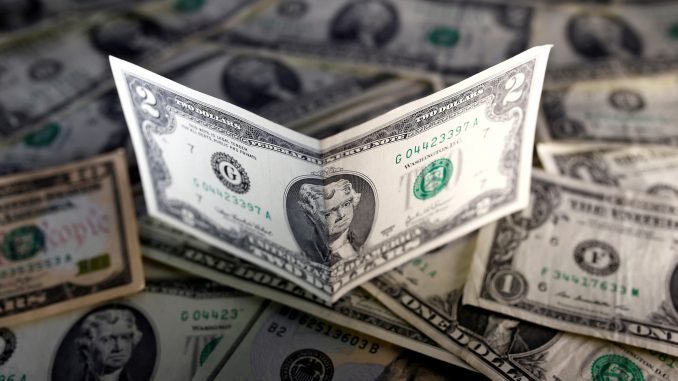
Donald Trump’s threats to impose tariffs of up to 30 per cent on European goods are a serious step towards a possible trade war between the United States (US) and the European Union (EU), Kamilė Medekšaitė states on TV3.lt .
Vidmantas Janulevičius, President of the Lithuanian Confederation of Industrialists, warns that Europe is not prepared for this battle and that the new tariffs could impact both German and Lithuanian industries. According to him, the US is pursuing a deliberate policy of isolation and is increasingly acting like a blackmailer on the international stage.
On how trade pressure is linked to military instability, what the possible consequences are for the European economy, and what the potential consequences are for Lithuania – TV3 Žinios “Dienos komentaras” interview with Vidmantas Janulevičius, President of the Lithuanian Confederation of Industrialists.
Trump is threatening Europe with 30 per cent tariffs. What is your version of how things will develop – will Europe engage in a trade war with the US, or will it be possible to avoid it?
Everyone would like to avoid a trade war, but it is challenging to predict what will happen. We can see that the negotiations, which had been going quite well over the last few months, have now suddenly stalled, and this statement was made on Saturday.
From our perspective, I think we can no longer hope for minimal tariffs – there is now no chance of that. It seems that there will not be a 10 per cent increase; it will probably be higher, at least 20 per cent, varying by each category of goods. This will undoubtedly hurt Europe, and those in the automotive industry will be the first to feel the impact, specifically Germany, Italy, and France, the same countries that export to the US. We all need to prepare ourselves.
But do you think Europe will not resort to a trade war?
In my opinion, Ukraine serves as a means of pressure. Just like Europe, I may help Ukraine and you, Europe. So don’t resist now, because if you do, I’ll put my foot down here, go there, and so on.
The US is moving towards isolation. A conflict may be planned so that it can then come to Europe’s rescue, as it did after the First and Second World Wars. This is not an unlikely scenario, because Mr. Trump can hardly surprise us with anything now. We know almost everything, but anything is still possible. Therefore, all scenarios are possible.
As for customs duties, if they are 20 per cent, we will feel them. There is no doubt about that. The German economy is likely to contract, as it is a significant contributor to industrial exports and the entire EU. Lithuania is a supplier of components, and in the long run, the flow of orders we have experienced so far is expected to decrease.
Then, logically, prices should rise in the US as well. Why aren’t they rising?
Inflation in the US is not low either – it is lower than in the EU and the Eurozone. I think it will rise sooner or later. Unless many agree that the massive increase in revenue in recent weeks was a huge spike from customs collection.
Now, Mr. Trump is blinded by those billions. Yesterday, we heard him say that vast amounts of money will flow in. Statistics also show this. I don’t think he will stop there, because the revenue from customs duties allows him to compensate for many other things – to reduce taxes, to stimulate production within the country’s business sector, to create new jobs. This is a big problem.
In terms of job creation, everything is okay for them. However, in Europe, in such a case, the number of jobs is likely to decrease. We need to focus heavily on industry, because we are not leaders in the service sector like the US. I am referring to large IT companies, such as Facebook and Google, as well as software developers.
We are strong in mechanical engineering – I am talking about the entire EU, not just Lithuania. We must strengthen our strengths and possibly prepare for the continuation of isolationist policies. No one is saying that we should stop pursuing new directions, i.e., information technology.
You mentioned that war could be beneficial to the US. The only ones who can start it in Europe are Russia. Are you saying that it would be helpful to Trump if Russia attacked NATO countries in Europe?
It wouldn’t be beneficial to him. However, given all the consequences we are seeing now, I would not rule out the possibility of a conflict. Then Trump could come to the rescue at a different price, or everyone would have to accept the status quo.
And again, as after World War II, everything is falling apart here, while the US is thriving?
The US is thriving and recovering. The US was heavily in debt, just like the Soviet Union, after the war. To rebuild Germany, Lend-Lease, other countries, and the Marshall Plan were utilised. They are aware of their history, and it cannot be ruled out that this could happen, but I want to believe that it won’t.
Can you provide us with some figures that illustrate how our situation would deteriorate if the new tariffs were introduced?
Looking through the prism of Germany, its GDP would go into recession – into negative territory – there is no doubt about that.
Unless a considerable amount of money – half a billion – is put into business, industry, defence, and infrastructure, which would somewhat offset and counterbalance this.
However, there would be a contraction, and Germany would face another year of recession if customs duties were introduced on January 1 or even August 1. This would mean a decline in imports, forcing many companies to relocate to the US. I heard that Volvo, which Gil Motors acquired, stated that it is suffering greatly from Chinese electric cars and is experiencing dumping. Some companies will have to relocate their jobs and production to the US. This means fewer jobs here, which is the biggest problem in Europe.
In any case, would orders from Germany also decrease in Lithuania?
Without a doubt, they would decrease. Although we do not manufacture directly and do not have assembly lines, we are directly linked to the automotive industry, and a decline in component manufacturing would have repercussions here in Lithuania.

Be the first to comment